Thursday, December 20, 2018

Day 4: Marshmallow Team-Building

Marshmallow Team-Building Activity

On Day 4 we did another teamwork activity that I found in Activities that Teach. This time, students were with their Classcraft teams again. We went outside, as I knew this was going to be a rowdy activity.

Here's how I ran the activity:

  • Each team received 10 toothpicks and 10 mini-marshmallows. I used multi-colored ones because it made the second half of the activity more difficult.
  • I told them to create a 2D design with their materials. As I have high schoolers, I found out pretty quick that I had to remind them to create a design that is school-appropriate.
  • While the teams were working, I set a pile of materials (toothpicks and marshmallows) in a new area (one pile of materials per team).
  • Also while teams were working I walked around and assigned each person a role. My teams had 3-4 people and there were 3 roles.
    • Messenger
    • Explainer
    • Builder (if I had a group of four, I designated two builders)
  • Once all teams were done designing, I explained the next portion of the activity. I told the builders to move to another area and sit next to a pile of materials that I set out while they were working.
  • I then explained what I wanted the other two to do.
  • I told each team that they would be moving to another team's design.
  • The messenger's job was to tell the builder how to replicate the new design, but there's a catch: the messenger cannot look at the new design and also cannot look at what the builder is building. They must relay messages but not look at either design.
  • The explainer's job was to tell the messenger what to say to the builder.
  • Basically, the explainer was describing what the design looked like, the messenger told the builder, and the builder replicated it.
  • I added a twist as well: the replicated design had to have the exact same colors as the original and in the same exact positions. This made the activity much harder, but I found it wasn't necessary for the purpose of the activity to sink in.
    • I did find out after assigning roles that I made a colorblind student into an explainer... their team didn't do so well, but they didn't mention it to me until halfway through! They were good sports about it, but I suppose it doesn't hurt to make sure that colorblind students are the messengers and not builders or explainers!
  • I also told my students that they would be earning XP in our game, depending on how much the replicated design mirrored the first one. I gave them a score out of 100.
Essentially, the purpose of the activity is to impress upon the students the importance of accurate communication, both in class and in social groups.

Students figured out pretty quick that this activity was hard, but if you had a good explainer and a messenger who listened well, the replicated design turned out pretty well in the end.

We had a short discussion afterward about the importance of communication (the questions in the book Activities that Teach were excellent for our discussion) and then I had my students answer the following questions on Google Classroom:

  • What happened during the activity?
  • How did your team do?
  • What was easy?
  • What was difficult?
  • What did you learn about communication from this activity?

They were able to earn up to 200 XP for answering the questions in complete sentences.

Here were some of their reflections:
"We had to go outside and make a 2d structure with our team and have another team try to communicate how to build our structure. Our team didn't do as good as some of the other teams but I thought we did pretty good. It was easy for me because I was the explainer so I just had to look at the structure and explain how it was built. It was difficult for the messenger to remember what I had explained and it was difficult for the builder to build what was explained to them. I learned that it is important to be able to communicate well with people around you to help you get things done."
"The activity was fun but it was very challenging. Our team did okay but I think we could have done better if we moved a little quicker and spoke directly. The easy part of this activity was building our own design because we could make whatever we wanted. The difficult part was trying to remake a different group’s design. I learned that communication is very important during group activities. If you say the wrong thing or are not very direct, the entire situation falls apart. I also learned that it’s not about talking fast but giving the right information even if it’s a little slower and takes more time."
"During the activity we had to build and initial 2-d structure out of marshmallows and tooth picks and the. We had to switch with another group and build it blind folded to the best mirror image we could. Our team did pretty well building a hard to copy shape but then we didn’t do so good at re making someone else’s. The easy part of the game was building the first shape and making it hard to copy. The difficulty came when we had to make someone else’s blindfolded. I learned that you have to be patient and work well with others to have good communication."
"In our teams, we were assigned to build a 2-D shape out of marshmallows and tooth picks. Once that was done, our team was assigned the position of either the builder, the messenger, or the explainer. We then shifted over to a different groups shape and the explainer had to explain to the messenger what the shape was without the messenger looking and then the messenger had to explain to the builder what to build. You also had to use the same colored marshmallows as the originals. I would say I team did fairly well considering the amalgamation of a shape we were given. The easy parts of this project were creating your own shape and telling the builder what they needed to build.
The difficult parts of the project were trying to explain the shape without causing mass confusion and also trying to sprinkle in the information of what color the marshmallows were without that also causing more confusion. I learned that communication is very difficult if you aren’t given the correct information or aren’t given the full picture of the subject."

Curious about the other activities that I did in the First Week of School?

Day 3: Play-Doh, Classcraft, and Student Questionnaire

Play-Doh Conversation-Starter Activity

After the Movie Marquee activity, I told students which teams they would be in for our gamified class. They sat in their teams and were given Play-Doh and a pile of get-to-know-you questions. I found all of the questions on a webpage titled "200 Questions to Get to Know Someone."

I told students to take turns. One person picks a question and answers it. The next person picks a different question and answers it, and so on. I gave them an option for using the Play-Doh: they could just mold it with their hands while talking, as many people just need something to do with their hands while talking, or they could mold their answer using the Play-Doh.

While they were doing this I imported students from Google Classroom into Classcraft and put them into teams.


Classcraft Introduction

After students were placed in teams on Classcraft, I introduced the game to them. I talked through the following...
  • Character Types
    • Warrior
    • Healer
    • Mage
  • Points
    • XP - Experience Points (how to earn them by meeting or exceeding expectations)
    • AP - Action Points (how to use powers to eat in class, choose music, use notes on quizzes)
    • HP - Health Points (how health points can be lost by not following expectations)
    • GP - Gold Points (how to use GP to buy armor or prizes in the classroom like snacks or hot chocolate)
I will write some posts in the future about how I structure my gamified class, so stay tuned for that!

After I introduced the game (and answered about a million awesome questions from my excited students!), students had the opportunity to create their characters, choose their team crests, and check out the platform.

That night I gave each student the XP that they earned fro the Teacher Quiz on Day 1.

Student Questionnaire

Before students left the room I gave them a questionnaire so I could learn more about each of them. I adapted my questionnaire from a student survey that Pernille Ripp put together. Students were to finish it that night and bring it back the next day. I gave XP to each student who brought their survey back completed the next day.

I learned a lot about their personalities by reading these!


Day 2: Movie Marquees and Google Classroom

Movie Marquee Activity

We started day two with an adaptation of an activity that I found in Activities That Teach by Tom Jackson. This activity requires students to draw, which can be painful for some students, but all students participated in the activity and had fun. This activity could also be an icebreaker, but I stuck to one of my goals: never use the word "icebreaker." It scares students away immediately!

Any guesses? Armageddon is my absolute favorite movie!
I started the activity by asking my students to think about their favorite movie but to keep it a secret from their classmates. Then, on a blank piece of paper that I provided, they had to draw at least three images that were either from the movie or that symbolized the movie. They also had to write the year in which their movie was released. A couple of students couldn't think of a favorite movie so I allowed them to draw their favorite TV show instead. I showed them an example of my favorite movie, which I drew that morning. I didn’t take too much time on it, as I didn’t want students to be nervous about drawing if they didn’t feel like artists. I encouraged the class to guess the movie and at least one person in each class was able to guess, even though my favorite movie was from 1998!

After students had a chance to draw out their favorite movies, they had to make a timeline with their movies. Once in the line students were encouraged to guess the movies of those around them. I then asked volunteers if they wanted to share their drawings with the whole class to see if others in the class could guess it. Quite a few people volunteered to share and we had a lot of fun with guessing!

This was another excellent opportunity for me to get to know my students on a more personal level, as someone's favorite movie can reveal a lot about a person. After the activity I allowed students to keep, recycle, or display their drawings. Many opted to hang theirs up on the walls. This was excellent, as they might not have realized it, but my students were already creating a positive culture. Laughing with each other, complimenting others' artwork, and creating a space where others were confident in sharing their drawings was a great start to the school year. Even some students that seemed nervous decided to post their drawing up in the classroom without hesitation.


Google Classroom

We only had a few minutes after the Movie Marquee activity, so I had students use that time to join the Google Classroom class that I invited them to earlier in the day.

I walked through Google Classroom with them--what is the stream, where to find classwork, etc.--and verified that everyone had joined the class before they left for the day.


Tuesday, September 25, 2018

Day 1: Teacher Quiz and Student-Made Class Guidelines

Attendance


I started the first day by introducing myself, just by saying my name. Then I took attendance, making sure to pronounce each name correctly and to write down nicknames that my students prefer. I told them before I started going through attendance that I wanted them to correct me if I was wrong in my pronunciation because their name is important!

Teacher Quiz


After going through attendance, I gave each student a half-piece of paper and told them to number 1-10. I then went through a slideshow that had 10 questions about myself. I told students that they would earn 10 points for each correct answer, and the points would come in later. The points would not go in the grade book so there wasn't any risk attached to the quiz.

I took this opportunity to hype up gamification and the cool things that we'd be able to do in our class game. This way, students knew that the points would be awarded later in the week and they weren't pointless!

Here is an idea of some of the questions...

  • How many siblings do I have?
  • What is my middle name?
  • What animal do I have as a pet?
  • What is one of my hobbies?
  • Name one place that I worked before I was a teacher.
  • Name a club or extra-curricular that I was involved in when I was in high school.
They seemed pretty interested to learn a little something about me and I had a great time hearing some of their guesses to my questions. I got a glimpse of their personalities almost immediately!

Class Guidelines (Created by Students)


In our last few minutes, I told the students to turn over their half sheet of paper and write 2-3 guidelines that we should follow in our class. I told them to consider how students should act individually, how students should act toward each other, and how I, their teacher, should act.

They turned in the sheets on their way out of the door. I compiled all of the guidelines from all classes and made a poster that remains on the wall to remind students of the expectations that they came up with and I shared the list with them the next day. I told them that I did not add anything to the guidelines, which is 100% true. They came up with an excellent list and I didn't need to add anything at all.

The Guidelines are now posted on the wall and referred to often.
Students are pretty good about following them, as they know that they
had a hand in creating them.

Thursday, September 20, 2018

First Week of School

This year I started at a new school and I made a conscious effort to show students that my main goal is to be there for them and help them to succeed. I also want my students to support each other in their endeavors.

We spent the first week focusing on creating a positive and supportive culture in the classroom before we started any content. In my experience, focusing on teamwork, collaboration, respect, and building each other up makes the rest of the school year run a lot smoother. This is certainly proving to be true this year!

First of all, I am consciously trying to stick to the following goals:

  • Refer to the classroom and classes as "ours" and not "mine"
  • Remind students that their voices matter in all activities
  • Smile and have fun! The "don't smile until Christmas" rule is ridiculous
  • Avoid the words "ice breaker"

Over the next few blog posts I will be explaining how I stuck to the above goals while sharing the activities that my class did during the first week of school, including reflections upon the overwhelmingly positive changes that it has made in my classes in only three weeks.

Here is an overview of the topics that are covered:

Wednesday, September 19, 2018

Legacies of WWI: Causes of WWI

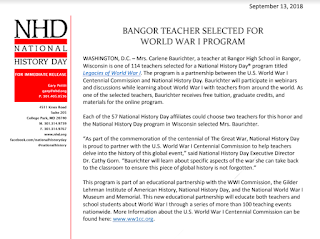
I have received a scholarship from NHD to participate in their Legacies of WWI course, which I'm super excited about! I'm one of 114 teachers to be chosen for the program this year. Here is the press release.

Press Release (click to view)
So far it has been a valuable experience and I have been able to discuss content and pedagogy with the other teachers in the class.

The first module was titled "The 'Why' of WWI: The Causes of WWI."

The readings were particularly interesting to me, as I have always been taught (and I have always taught my students) that there were four MAIN causes of WWI:
  • Militarism
  • Alliances
  • Imperialism
  • Nationalism
During the webinar, which was the culminating activity in the module, I learned that these main causes are anything but actual causes.

Dr. Neiberg, the webinar presenter, discusses how Europe was, in fact, demilitarizing in the early 1900s. Alliances had existed for centuries and never led to a world-wide war before, especially considering the fact that these alliances were defensive. This means that if one nation attacked another, the attacker would not be supported by its allies. The allies would only help out in the case of a defensive war, meaning if their ally was attacked by someone else. Imperialism had been occurring but was declining. And lastly, nationalism can't be considered a reason to go to war. A person might believe that their nation is the best nation in the world, but they won't go killing other people over it for no reason.

In general, I was very surprised. I have been teaching it in a way that is not actually widely accepted by scholars, but instead because teachers have decided that MAIN is a helpful acronym!

The biggest realization that I came to was that the spark, the assassination of the Austro-Hungarian Archduke Franz Ferdinand and his wife Sophie, was actually not the spark that led to the Balkan powderkeg exploding at all... more like a spark that fizzled out and dissipated quickly.

No one in Europe cared much about the assassination and certainly were not prepared or motivated to go to war over it. They viewed it as just another violent episode in the history of the Balkan region. It didn't hold much significance, as this sort of thing happened more often during that time period and in that region than most modern people realize. The Archduke and his wife weren't even particularly popular or liked by their own people. I was floored when I read this, but it makes so much sense that the assassination would not actually lead to a much larger, worldwide fight.

I'm not quite sure how I'm going to approach the causes of WWI this school year and into the future, but I know that teaching the MAIN causes is not beneficial or accurate. Even Dr. Neiberg said that most teachers resort to the acronym because they don't have enough time to fully discuss the causes of WWI, so it's understandable. Fortunately for me, I have more time to devote to WWI than I have in the past so I can attempt to help students fully understand the intricate and complicated causes of WWI in a way that is more historically accurate than the MAIN explanation. I just have to do some more research before I reach that part of the school year, as I want to be fully prepared to teach my students correctly. I'll have to refer back to the webinar to get some ideas!


Wednesday, September 12, 2018

Dynamic Learning Plan - Progressive Era

I completed my Dynamic Learning Plan, a unit on the Progressive Era, and submitted it to Kasey Bell's (Shake Up Learning) Dynamic Learning Database.

I was one of a few teachers to win a Google Chrome Cast for participating!

I'm hoping that I'll be able to put the chrome cast to use at school soon!

Read more about my Progressive Era Planning Document.